

All news
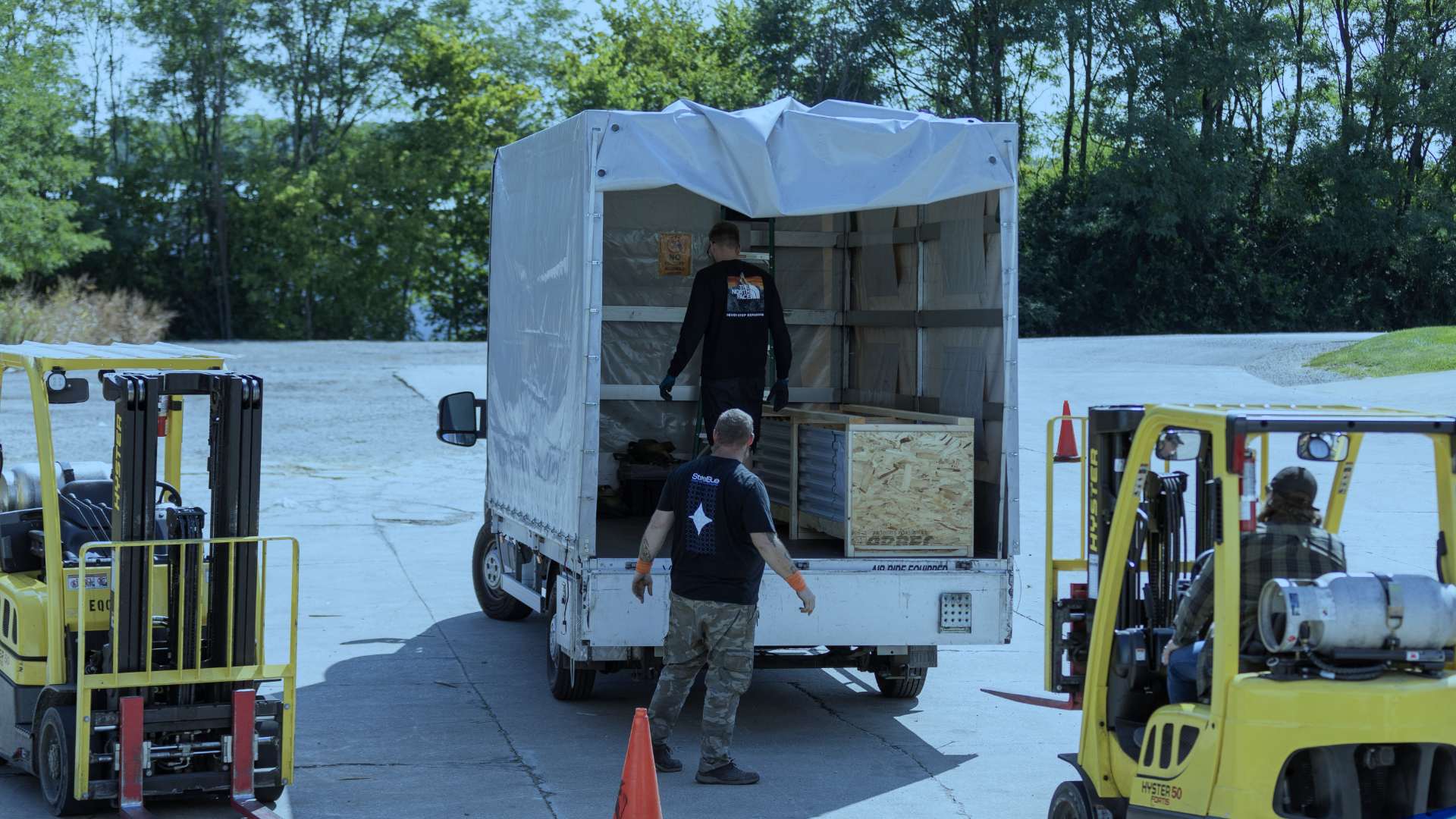
Roll-Up Doors From Factory to Job Site
Constructing a Self-Storage facility is a complex orchestration of logistics, timing, and precision, with one of the most critical components being the shipment of materials from the manufacturing facility to the construction jobsite. This journey involves multiple stakeholders, careful planning, and a well-coordinated supply chain. Just like everything we do in our day-to-day lives follows an order of assembly, the coordination and shipment of materials to a jobsite must follow a structured process to ensure construction begins smoothly. From the moment a quote becomes an order, numerous people and touchpoints come into play. Let’s walk through the process, explore the importance of shipping dates, and examine how to overcome some of the unique challenges that arise along the way.
Manufacturing and Material Readiness
Before materials leave the factory, a project manager must get confirmation of the job site’s readiness with the production and delivery schedule. This step often involves regular check-ins to monitor site progress and ensure clear communication of any potential delays. It’s essential to share all pertinent updates with the project manager so they can accurately schedule your job for production. Missing this coordination step can result in costly delays, with materials arriving too early or too late for the construction timeline.
Before any materials are shipped, they must be carefully fabricated and prepared to align with the construction schedule.
- Production Scheduling: Manufacturers coordinate the production of essential components based on the project timeline. The project manager collaborates closely with the production scheduler to organize shipments in strategic releases. This phased delivery approach enables installation crews to receive materials in the exact sequence needed for efficient assembly, minimizing downtime and preventing delays caused by missing or out-of-order components.
- Quality Control: Materials undergo inspection to ensure they meet specifications and safety standards.
- Packaging and Labeling: Items are bundled, labeled with jobsite-specific identifiers, and prepared for transport to minimize damage and confusion during unloading.
Logistics Planning and Coordination
Once materials are ready, the logistics team steps in to ensure everything moves smoothly from the manufacturing facility to the jobsite. This team plays a critical role in coordinating shipping accuracy. Their attention to detail helps prevent delays, misplaced materials, and costly errors.
- Carrier Selection: Depending on the type of materials, logistics managers choose between a truck that is covered or not.
- Route Optimization: Routes are planned to avoid delays due to weather, road restrictions, or urban congestion.
Transportation and Tracking
The materials hit the road:
- Loading: Forklifts are used to load materials securely, with attention to weight distribution and protection from the elements.
- Communication: Drivers stay in contact with dispatch and the lead construction foreman on the jobsite to provide updates or report issues.
Delivery and Unloading at the Jobsite
Arrival at the construction site marks a critical phase in the material handling process:
- Staging Area Preparation: A designated area is identified for unloading and staging materials.
- On-Site Presence: It is essential that a qualified team member is present at the jobsite to receive the delivery. Their role is not just to guide the driver and oversee unloading, but also to ensure that the materials are handled properly upon arrival, making them a key player in the successful execution of the project.
- Unloading Equipment: The use of forklifts or cranes are used to offload materials safely and efficiently.
- Inventory Check: Delivered materials are cross-checked against the Bill of Lading (BOL) to ensure nothing is missing or damaged.
Integration into Construction Workflow
With materials on-site, construction can proceed:
- Just-in-Time Delivery: To avoid clutter and damage, materials are often delivered in releases aligned with the construction schedule.
- Storage and Protection: Weather-sensitive items are recommended to be covered or stored in weather climate areas to prevent erosion.
The successful delivery of materials from a manufacturing facility to a Self-Storage construction site is a finely tuned process that requires collaboration, precision, and adaptability. Delays or missteps at any stage can ripple through the entire project timeline. By leveraging technology, experienced logistics partners, and proactive communication, developers can ensure that their Self-Storage projects stay on track and on budget.

Robert (BJ) Grandinetti joined SteelBlue in June 2022 and is located in the Pittsburgh office. BJ brings ten years of experience to assist the team with detailing, estimating, and project management. BJ and his wife of 3 years are expecting their second child this June. When he’s not spending time at work or with his family, he enjoys traveling and riding/building motorcycles.